


Low vitamin D is common, but it often causes no symptoms at all, which is why many people only find out from a blood test. When a shortfall is severe or lasts a long time, the signs show up mainly in bones and muscles. Here is what to look for, what the research says about tiredness, mood and blood pressure, and how testing works.
What are the symptoms of vitamin D deficiency?
Vitamin D helps your body absorb calcium, so a long-term shortfall affects bones first. According to MedlinePlus, the signs that can point to very low vitamin D include:
- bone pain
- muscle weakness or aches
- soft or misshapen bones
- weak bones and fractures
In adults, severe deficiency can cause osteomalacia, a softening of the bones, and contributes to osteoporosis; in children it causes rickets. Because milder shortfalls usually cause no symptoms, risk factors are a better guide than how you feel.
Can low vitamin D make you tired?
Possibly, but the evidence is thin. A study of 81 sleep-clinic patients found links between vitamin D levels and daytime sleepiness that differed by race, and the authors called for more research. Tiredness has many causes, from sleep and stress to iron and thyroid problems, so it is worth seeing a doctor rather than assuming it is vitamin D. Our article on why you might feel tired all the time covers the common culprits.
Is low vitamin D linked to depression?
People with low vitamin D are more likely to report low mood, but that does not mean vitamin D is the cause. When the VITAL trial gave adults over 50 either 2,000 IU a day or a placebo for about five years, vitamin D did not prevent depression or change mood scores. If you are struggling with your mood, talk to a doctor.
Does low vitamin D raise blood pressure?
A large genetic study of 146,581 people suggested that higher vitamin D levels might slightly lower the risk of high blood pressure. But when researchers pooled 46 randomized trials, vitamin D supplements did not lower blood pressure. High blood pressure needs a doctor's care, not a vitamin.
Who is most at risk of low vitamin D?
Your risk is higher if you rarely expose your skin to sunlight, have had weight-loss surgery, have a condition that affects absorption such as Crohn's or celiac disease, have kidney or liver disease, or take certain medicines including some statins, steroids and weight-loss drugs. Breastfed babies need a vitamin D supplement, because breast milk is low in it.
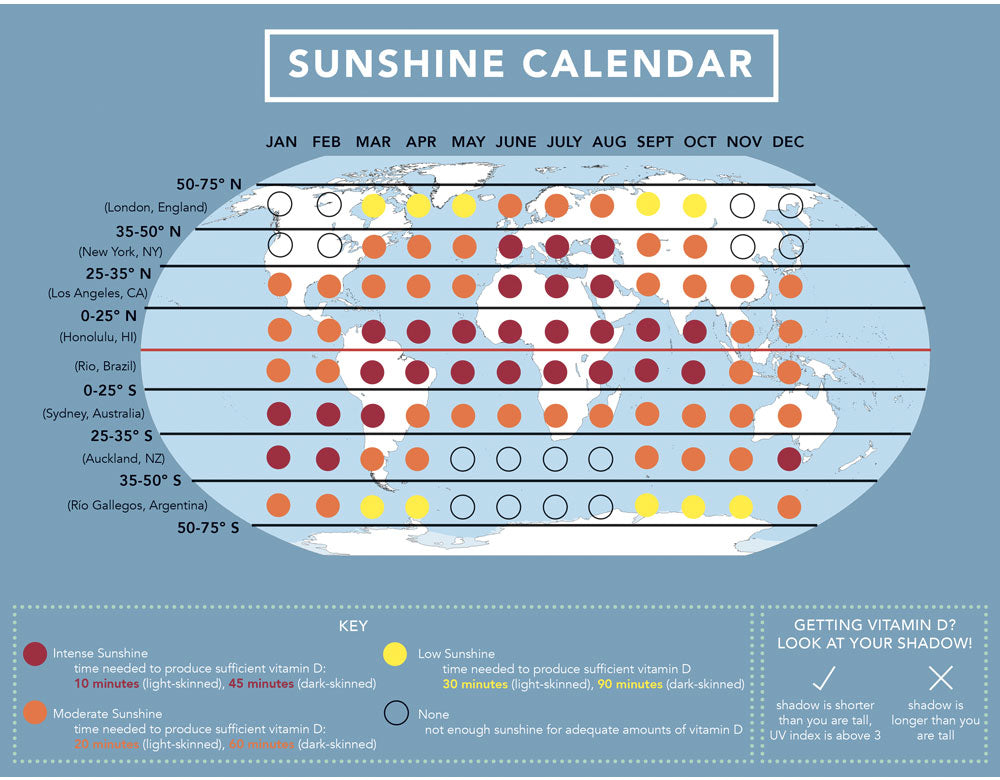
Skin tone matters too. In national data from 2011-2014, 17.5% of non-Hispanic Black Americans were at risk of deficiency, against 2.1% of non-Hispanic white Americans. Older adults are also at higher risk, because aging skin makes less vitamin D. Where you live matters as well:
How do you test your vitamin D levels?
A simple blood test measures 25-hydroxyvitamin D, the storage form your liver makes from the vitamin D you get from sun, food and supplements. According to MedlinePlus:
- below 12 ng/mL (30 nmol/L) is too low
- 12 to 20 ng/mL (30 to 50 nmol/L) may be too low for bone and overall health
- 20 ng/mL (50 nmol/L) or above is enough for most people
- above 50 ng/mL (125 nmol/L) is probably too high
A different test, for 1,25-dihydroxyvitamin D, is not used to check whether you get enough vitamin D; doctors use it to monitor kidney problems or investigate abnormal calcium levels. Routine testing is not recommended for everyone, and the 2024 Endocrine Society guideline advises against routine screening in people without a medical reason, so ask your doctor whether a test makes sense for you.
How can you raise low vitamin D levels?
If a test shows you are deficient, your doctor will advise on a treatment dose. For everyday intake, the RDA is 600 IU (15 mcg) a day for ages 1 to 70 and 800 IU (20 mcg) after 70, and the upper limit for adults is 4,000 IU (100 mcg) a day. Our article on how much vitamin D you need goes through the numbers, and sources of vitamin D covers sun and food.
For a supplement, choose vitamin D3, which a meta-analysis found raises blood levels more than D2. Our Sol Food tablets provide 2,000 IU of vitamin D3 from lichen in one small organic, vegan tablet. If you have kidney disease, are pregnant or take prescription medicines, talk to your doctor before starting.


